maandag 28 februari 2011

vrijdag 25 februari 2011
Facades become displays

Facade displays become more and more popular and are mostly generated by projections or LED grid structures. Thanks to ONLYGLASS Mediafacade displays the image will be integrated in the building surface or the glass surface in the future and, therefore, will become part of the architecture.
Media technology is changing the face of our inner cities fast, fostering a new architectural awareness. ONLYGLASS MEDIAFACADE is the world’s first transparent media façade that can be integrated directly in a building’s existing structure. As the component LEDs are embedded in insulating glass, the display panels can be treated like normal insulating glass and installed in a façade without altering its architecture in any way. As a result, the system becomes a fully functioning part of the building, with the insulating glass fulfilling its normal functions without the LED display screen disturbing the people inside.

Depending on the chosen pixel pitch (from 20mm and scalable in 10mm steps), a light transparency level of between 80% and 90% can be achieved. Visibility from inside the building is not impaired and the insulating glass remains fully functional, regardless of whether the panels are coated or not. The giant display screen is a combination of single insulating glass panels (maximum size: 3,500mm x 2,700mm), which means there is no limit to the number of modules that can be connected together.Due to the low additional weight of approx. 3.5 kg/m², ONLYGLASS MEDIAFACADE can be installed in most buildings without affecting the structural load - a particularly appealing feature from a heritage protection perspective.
ONLYGLASS MEDIAFACADE functions like a PC monitor, i.e. anything that can be displayed on a PC screen can also be displayed by ONLYGLASS MEDIAFACADE.
ONLYGLASS MEDIAFACADE can be used in a multitude of ways inside buildings, e.g. for large-scale room dividers or multi-floor displays that provide a view over an interior courtyard.
If no insulating effect is required, ONLYGLASS MEDIAFACADE can also be integrated in a single glass panel (visible on one side) and affixed to various substructures, e.g. exposed concrete walls or heritage-protected interior facades.
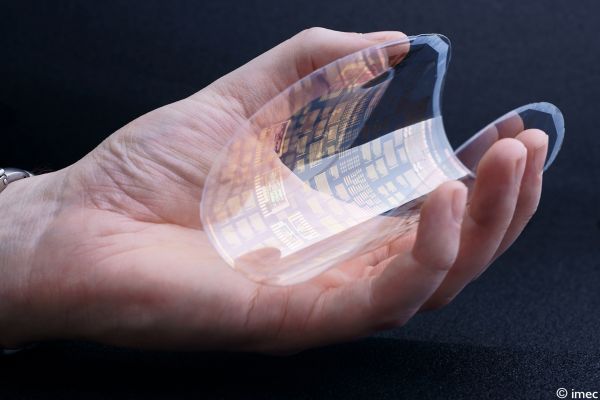
IMEC creates flexible microprocessor with organic semiconductors.
Bron; www.engadget.com
Organic semiconductors have been teasing us with the possibility of computationally-inclined clothing for years, but until now we could only dream about our pants being the computer. That dream is closer to reality than ever, as researchers from IMEC have created a cheap (potentially 1/10th the cost of silicon chips), bendable microprocessor by layering a plastic substrate, gold circuits, organic dielectric, and a pentacene organic semiconductor to create an 8-bit logic circuit with 4000 transistors. Executing 6 instructions per second, these things won't be challenging Watson any time soon, but the chips should prove useful in creating cheaper flexible displays and sensors to tell us whether that week-old chicken in the fridge has gone bad. The trick was to overcome individual organic transistors' variable switching voltage thresholds -- as opposed to silicon's predictable nature -- that eliminated the possibility of organic-based logic circuits previously. But by adding a second gate to each transistor, IMEC was able to control the electrical field in each to prevent unwanted switching and usher in the dawn of plastic processors. The zenith of nerd fashion can't be far behind.
donderdag 24 februari 2011
Samsung Smart TV.
Bron; www.fan.tv
Smart TV gaat de strijd aan met Google TV
Samsung komt met een concurrent voor Google TV. Hun Smart TV systeem brengt ook internet naar de televisie. Al in het voorjaar van 2011 moeten de eerste Samsung televisies met Smart TV in de winkel staan. Deze televisies staan draadloos in verbinding met het thuisnetwerk en met internet. Browsen, mailen, messengers gebruiken, Facebook gebruiken en Youtube video's bekijken kan allemaal heel eenvoudig op de televisie, zonder tussenkomst van een computer, plaatsvinden. Via een optionele webcam en Skype kan er op de Smart TV's ook met beeld getelefoneerd worden.
Via een zoekscherm kan er naar informatie gezocht worden, of deze nu op internet, in de TV gids, op een computer in het netwerk of in opgenomen tv-uitzendingen staat.

Een groot verschil met Google TV is dat bij Samsung Smart TV de invoer van tekst niet via een qwerty-toetsenbord plaatsvindt maar via de nummerieke toetsen van de afstandsbediening, zoals je een SMS tikt op een telefoon. Ook kunnen de Samsung Galaxy Tab tabletcomputer en Samsung smartphone draadloos als toetsenbord dienst doen. En niet alleen als toetenbord, het wordt zelfs mogelijk op de displays van mobiele Samsung apparaten televisiebeelden te bekijken die door de Smart TV worden doorgestuurd.
Ook Samsung blu-ray spelers worden voorzien van Smart TV zodat de functies van Smart TV ook op andere televisies beschikbaar komt als je er zo'n blu-ray speler op aansluit.
Smart TV gaat de strijd aan met Google TV
Samsung komt met een concurrent voor Google TV. Hun Smart TV systeem brengt ook internet naar de televisie. Al in het voorjaar van 2011 moeten de eerste Samsung televisies met Smart TV in de winkel staan. Deze televisies staan draadloos in verbinding met het thuisnetwerk en met internet. Browsen, mailen, messengers gebruiken, Facebook gebruiken en Youtube video's bekijken kan allemaal heel eenvoudig op de televisie, zonder tussenkomst van een computer, plaatsvinden. Via een optionele webcam en Skype kan er op de Smart TV's ook met beeld getelefoneerd worden.
Via een zoekscherm kan er naar informatie gezocht worden, of deze nu op internet, in de TV gids, op een computer in het netwerk of in opgenomen tv-uitzendingen staat.

Een groot verschil met Google TV is dat bij Samsung Smart TV de invoer van tekst niet via een qwerty-toetsenbord plaatsvindt maar via de nummerieke toetsen van de afstandsbediening, zoals je een SMS tikt op een telefoon. Ook kunnen de Samsung Galaxy Tab tabletcomputer en Samsung smartphone draadloos als toetsenbord dienst doen. En niet alleen als toetenbord, het wordt zelfs mogelijk op de displays van mobiele Samsung apparaten televisiebeelden te bekijken die door de Smart TV worden doorgestuurd.
Ook Samsung blu-ray spelers worden voorzien van Smart TV zodat de functies van Smart TV ook op andere televisies beschikbaar komt als je er zo'n blu-ray speler op aansluit.
woensdag 23 februari 2011
Different Pictures To Different Parts Of The Room.

The technology Sony is now demoing is something we’ve heard about before, and which really might be considered one of the holy grails of display tech. The basic idea is that depending on where you are in the room, you see a different image. At the moment, they can only do two images, and people sitting on opposite sides of the couch could, in the demo, both play Killzone 3 on the full screen without seeing what the other person sees.
Very cool, but imagine if you could have two channels on at once, one facing the kitchen and one facing the couch? Or three or four, with wireless headphones sending just that image’s audio to each person?
Of course, taking it too far obliterates the “cooperative” nature of watching TV shows, but I think it could still be really cool. Of course, prepping people for your demo by saying “this will hurt your eyes” probably isn’t the best way to sell it. I’m guessing it’s still got a ways to go, but this could be a feature that actually sets Sony TVs apart if they pull if off.
European Figure Skating Championships in 2011.
100 screens driven by SpinetiX HMP100 devices by the Swisscom Events Team. Displayed on the screen are a live TV stream, insight information on the runner or program, sponsors and live tickers.
Worlds Largest Video Dome.
Obscura has created for Google the worlds largest video dome
It is the largest multi channel video environment ever created. They used 11 Christie 20,000 lumen projectors to create seamless video on over 12,000 square feet of surface area.
This dome was 90 feet across and stood over 50 feet high. They shot stills and video that was played back throught their 4K playback decks. Take a look at the video
It is the largest multi channel video environment ever created. They used 11 Christie 20,000 lumen projectors to create seamless video on over 12,000 square feet of surface area.
This dome was 90 feet across and stood over 50 feet high. They shot stills and video that was played back throught their 4K playback decks. Take a look at the video
dinsdag 22 februari 2011
Video Dance Storytelling on Large Displays.
Transit: Digital Video Dance Storytelling on Large Displays at the LAX Airport.
Scott Sona Snibbe, an interactive artist, created a large-scale video installation on twenty-nine connected HD displays that curved around at the Tom Bradley International Terminal at the LAX airport in 2010. The video tells a story of groups of people traveling through an airport who eventually begin dancing in interesting ways.
Francesca Penzani was the choreographer for this project. Noah Cunningham was responsible for the cinematography, editing, and post-production.
Meer informatie over Scott Sona Snibbe.
Scott Sona Snibbe, an interactive artist, created a large-scale video installation on twenty-nine connected HD displays that curved around at the Tom Bradley International Terminal at the LAX airport in 2010. The video tells a story of groups of people traveling through an airport who eventually begin dancing in interesting ways.
Francesca Penzani was the choreographer for this project. Noah Cunningham was responsible for the cinematography, editing, and post-production.
Meer informatie over Scott Sona Snibbe.
65"-oled-tv.
Bron; tweakers.net
Samsung Mobile Display heeft technologie ontwikkeld waarmee het mogelijk is om 65"-amoledpanelen te produceren met behulp van 5.5G-substraten. Met de huidige technologie zijn amoledpanelen met een maximale grootte van 32" mogelijk.
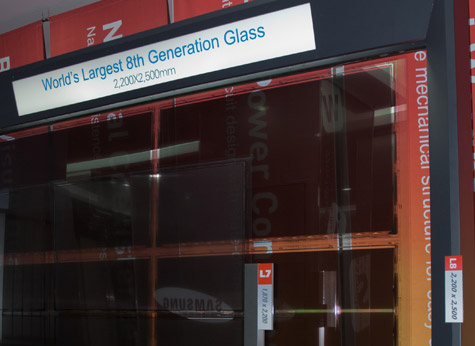
Glassubstraten, zoals die gebruikt worden in de huidige 5.5G-amoledproductielijn van Samsung, hebben een grootte van 1,3 bij 1,5 meter. Met de huidige technologie zijn hieruit amoledpanelen te snijden met een maximale grootte van 32", omdat het substraat vanwege de gebruikte opdampingsmethode in minimaal drie stukken moet worden opgedeeld. Met het nieuwe amoledprocedé van Samsung is deze opdeling niet meer nodig, zodat de maximale grootte voor een 5.5G-productielijn stijgt naar 65", zo is te lezen bij Oled-Info.
Samsung Mobile Display gaat zijn tweede 5.5G-amoledfabriek in Tangjeong geschikt maken voor de nieuw ontwikkelde productietechnologie. Die fabriek komt in 2012 in bedrijf. Samsung heeft al een 4.5G-amoledfaciliteit in Cheonan, waar gewerkt wordt met substraten van 730 bij 920 millimeter. Die fabriek legt zich uitsluitend toe op de productie van displays voor mobiele toepassingen, zoals smartphones. Daarnaast opent Samsung Mobile Display in het tweede kwartaal zijn eerste 5.5G-fabriek. Die zal nog op het oude procedé stoelen en bedoeld zijn voor de productie van panelen voor mobieltjes en mogelijk tablets.
Hoewel Samsung in 2012 naar verwachting in staat is om 65"-amoledpanelen te produceren, zullen deze nog zeer duur zijn. Om de prijs van grotere amoledpanelen omlaag te brengen, is het nodig om substraten van de achtste generatie met een grootte van 2,2 bij 2,5 meter te kunnen verwerken. Uit een 8G-glassubstraat kunnen acht 46"-panelen gesneden worden. Samsung is van plan om een 8G-proeffabriek voor oleds op te zetten. Die moeten in 2013 online komen en volgens de originele planning zouden daar 55"-oledpanelen geproduceerd kunnen worden. Met de nieuw ontwikkelde technologie zijn zelfs nog grotere formaten mogelijk
zaterdag 19 februari 2011
3D touchcreen.
Bron; www.fan.tv
Op het Mobile World Congress toont het Japanse NTT DoCoMo de allereerste 3D touchscreen.
Op het Touchable 3D Display kun je zonder brilletje 3D beelden zien. Dat is niet nieuw, maar wel revolutionair is dat je de 3D objecten ook kunt aanraken en op die manier kunt besturen. Dat doe je niet met je vingers maar met een speciale stylus.
Deze stylus trilt als je boven het scherm een 3D object aanraakt (of eigenlijk denkt aan te raken). Dit effect wordt bereikt door het toepassen van een magnetisch veld. terwijl twee camera's de positiebepaling voor hun rekening nemen. Door de trilling lijkt het alsof je het door gezichtsbedrog verkregen 3D object echt aanraakt.

Als demo draait er een spelletje op het scherm waarbij een kameleon de stylus met zijn tong probeert te pakken. Lukt hem dat, dan voelt de gebruiker zo'n sterke trilling dat de stylus uit zijn hand lijkt te worden getrokken.
Er is nog niets bekend over fabrikanten die de 3D touchscreen van NTT DoCoMo in hun apparaten gaan verwerken, maar dat dat gaat gebeuren lijkt een kwestie van tijd.
Op het Mobile World Congress toont het Japanse NTT DoCoMo de allereerste 3D touchscreen.
Op het Touchable 3D Display kun je zonder brilletje 3D beelden zien. Dat is niet nieuw, maar wel revolutionair is dat je de 3D objecten ook kunt aanraken en op die manier kunt besturen. Dat doe je niet met je vingers maar met een speciale stylus.
Deze stylus trilt als je boven het scherm een 3D object aanraakt (of eigenlijk denkt aan te raken). Dit effect wordt bereikt door het toepassen van een magnetisch veld. terwijl twee camera's de positiebepaling voor hun rekening nemen. Door de trilling lijkt het alsof je het door gezichtsbedrog verkregen 3D object echt aanraakt.

Als demo draait er een spelletje op het scherm waarbij een kameleon de stylus met zijn tong probeert te pakken. Lukt hem dat, dan voelt de gebruiker zo'n sterke trilling dat de stylus uit zijn hand lijkt te worden getrokken.
Er is nog niets bekend over fabrikanten die de 3D touchscreen van NTT DoCoMo in hun apparaten gaan verwerken, maar dat dat gaat gebeuren lijkt een kwestie van tijd.
Abonneren op:
Posts (Atom)


